
2023 - Provence - Avignon
photography: mytravellinglens.com
On our 2023 visit to the area we return to rent a house not far from Avingon.
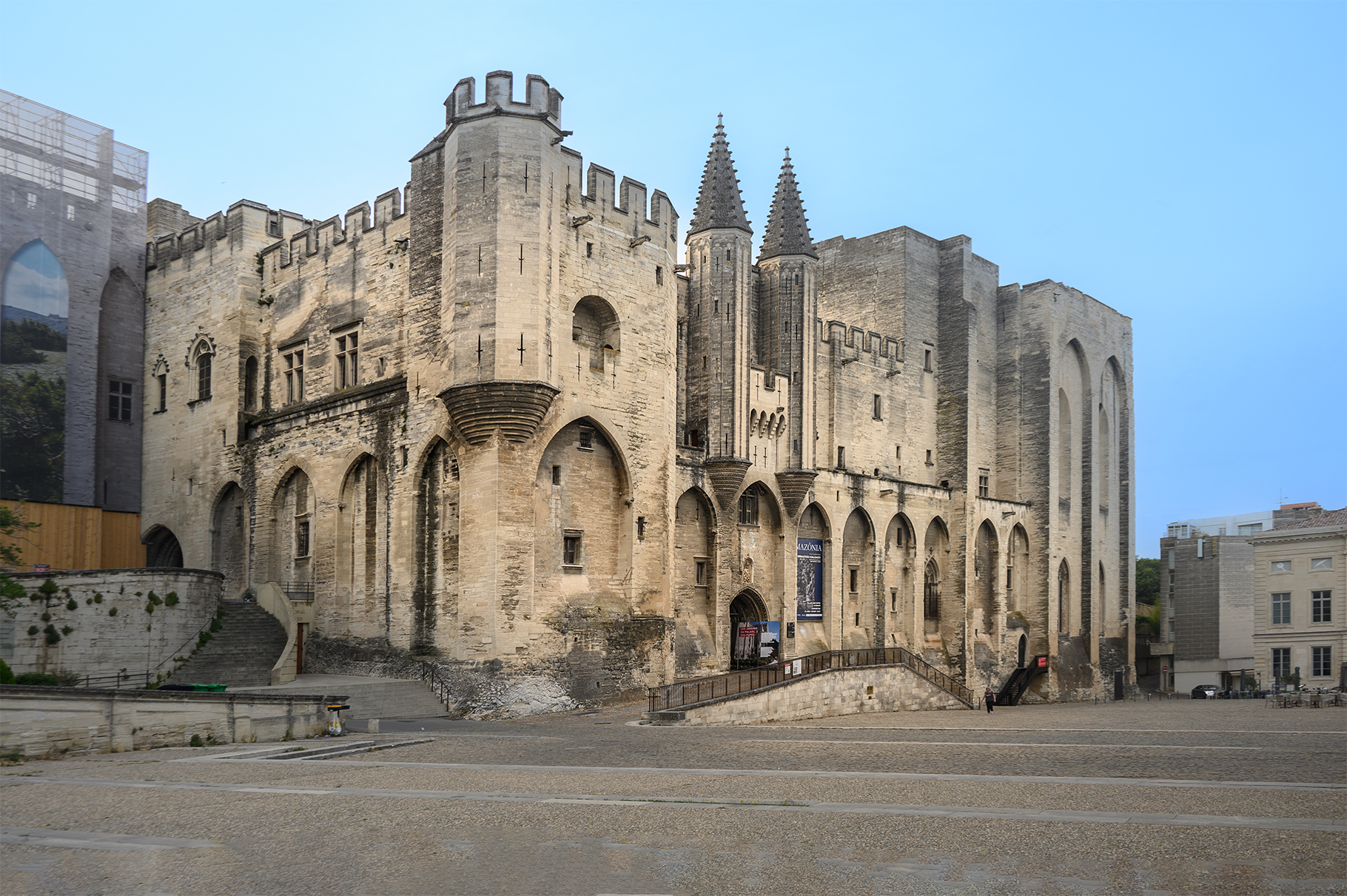
The Palais des Papes is the largest Gothic palace ever built flows from Pope Clement V, moving from the violent disorder after his election in Rome (1309) to Avignon. Built within 3m-thick walls, the massive halls, chapels and antechambers are mainky bare today as it was used for other uses after the Popes moved back to Rome. For seven decades this was the palace and seat of papal power.
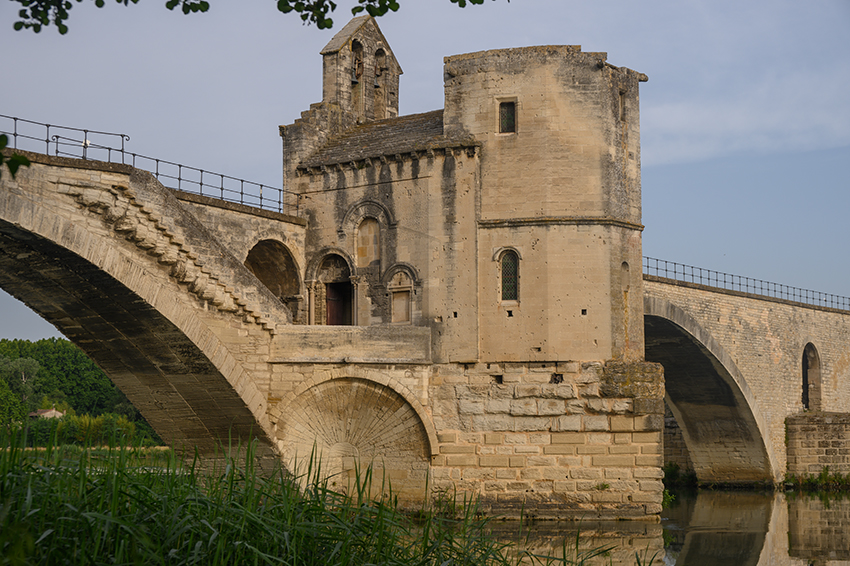
Pont St-Bénézet
photography: mytravellinglens.com
Completed in 1185, the 900m-long bridge linked Avignon with Villeneuve-lès-Avignon. It was rebuilt several times before all but four of its 22 spans were washed away in the 1600s, leaving the far side marooned in the middle of the Rhône.
Église et Cloître des Carmes
Located at Place des Carmes, building of this Romanesque and Gothic Carmelite church and cloister began in the 13th century. It became one of the first theatre and dance venues of the Festival d'Avignon. The current state owes its survival to the many dwellings that were built there over the centuries. They werre all cleared and the cloisters and church restored, it has regained its former glory and its chapter house vaulted with ribs, liernes and tiercerons.
The cloister is currently accessed through a door opening onto the Place des Carmes. Built during the 14th-century, the cloisters were restored in the 1900s and are now a quiet space to relax, complete with their own secret gardens!
Clocher des Augustins
Not far from the cloisters, the Augustine bell tower presides over the rue de la Carreterie and is all that’s left of an ancient Augustine Convent. The stone tower was built between 1372 and 1377 in the typical Avignonaise style.
Porte de la République
One of the gateways to Avignon's walled city, located on the southern edge of the walls, and across from the central train station.
Porte de I'Oulle
Another of the entryways thnrough the walls on the northwestern edge of the walls, near the River Rhône and Pont d'Avignon.
Palais du Roure
3 Rue Collège du Roure, 84000 Avignon, France
Located in what is described as a gorgeous centuries-old Gothic-style mansion, it noiw houses a big collection of bells. The building was originally named for banker Pierre Baroncelli, and it's now home to the Felibrige movement, which promotes the Provencal language and traditions. Frederic Mistral, one of the founders of the Felibrige movement, was often seen at this historical landmark. Roure means "oak" in provençal, and the name refers to the oak branches sculpted on its façade. The collection includes everything provençal: manuscripts and icons, furniture, santons and Christmas cribs, tools, bells and traditional costumes.
Église Saint Symphorien
Situated on the fringes of the historic city centre, the church of the ancient Covent of Carmelites (1267) is one of the lesser known ecclesiastical buildings that Avignon has to offer. Free to enter, highlights include 17 chapels alongside the nave and early 17th-century panels by Guillaume-Ernest Grève.
Couvent des Cordeliers
The old Franciscan convent (1266) was built outside the original fortified walls. The church, vast in size, completed in the mid-14th-century. After the French Revolution it was confiscated and sold. Today thre is just one tiny chapel, a picturesque façade and a crumbling bell tower.
