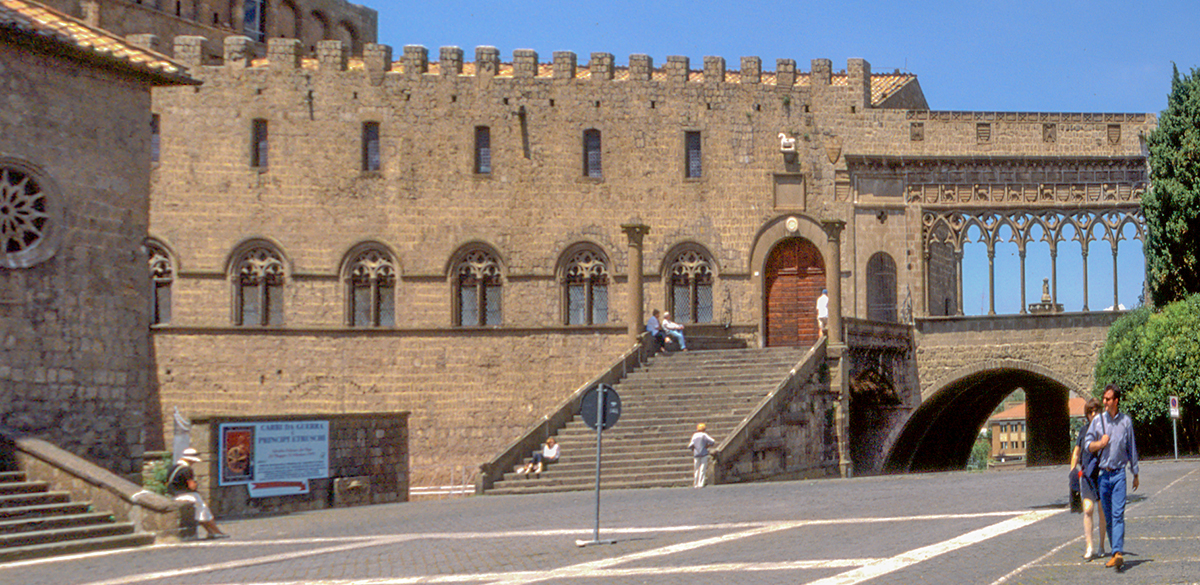
VITERBO
Originally founded by the Etruscans, and later taken over by the Romans, Viterbro has been and important town. In the 13th Century it became the of the few official residence of the Popes outside of Rome.
World War II resulted in a fair amount of damage to Viterbo. But, the town was rebuilt. We were impressed with the centre of the town. First visisted in are early trips to Italy, we returned in 2018, 2019 and 2021. The maze of narrow streets and the architecture provide a great framework to explore the town. There are massive palaces the are on both sides of the streets. When a town became a residence of the Pope, the elite seemed to follow very quickly.
The Piazza del Plebiscito is surrounded by 15th and 16th palaces. The Palazzo dei Priori, open daily, but remember it will close over the lunch break is impressive and that includes a 17th century fountain in the courtyard.
The Cathedral di San Lorenzo dates from the 12th Century. The Sala del Conclave is the room that held the elections for the Pope.
The Chiesa di Santa Maria Nuova, restored after the bombing of World War II, include beautiful cloisters that are worth a visit. The Baptistery dates to the 13th Century and is located behind the cathedral. Octogonal in shape with a doom, it is green and white marble. Simple inside, with a stark appearance. The Sansovino baptismal font is impressive, all made from white marble.
The Chiesa di San Francesco was also restored after World War II bombing. It contains tombs, with lavish decorations, for two Popes (Clement IV, 1268 and Adrian V, 1276). The tomb of Adrian has work by the noted artist Cosmati.
The Roman Theatre is located near the walls and has 19 rows of seats remaining as well as part of the stage and column.
The Thermal Springs, that is why the Roman's established this town as a resort, are located 3 km west of the town itself. None of the old Roman bath structures remain.
Sights Near Viterbo.
Villa Lante
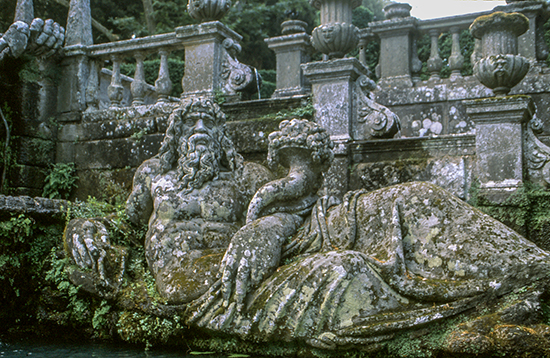
Villa Lante is a villa with an impressive garden, complete with an array of fountains. The villa has two almost identical houses built by two different owners. The gardens feature cascades, fountains and dripping grottoes. The water works are by Ghinucci, a hydraulics engineer. If you like ornate Italian gardens, you will enjoy Villa Lante. The Villa is about a 12 minute drive from Viterbo. We most recently visited Villa Lante in 2021. The park is a reasonable size to enjoy. You will not feel exhausted when you leave.
Civita di Bagnoregio
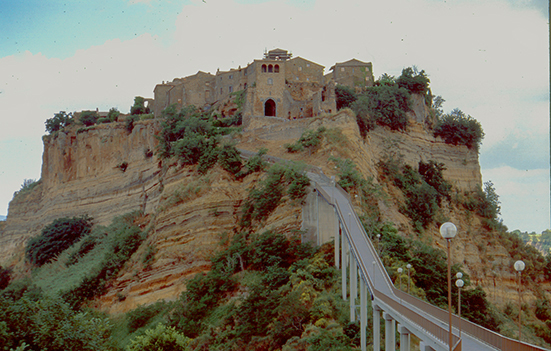
Civita di Bagnoregio is located about 30 km north of Viterbo, about 35 to 40 minutes by car. For our first visit we just drove to the bridge and then walked into the town. Not anymore. You buy your ticket in town, Bagnoregio, and then can walk to the bridge (20 - 30 minutes) or take a bus. Then you walk up a long narrow elevated walkway to enter the old town.
In 2021 I returned to Civita but also visited Celleno - Borgo Fantasma - another town deserted after earthquakes made it unsafe. I liked Celleno better. It is written in our 2021 Trips of Note.
Monte Romano Drive
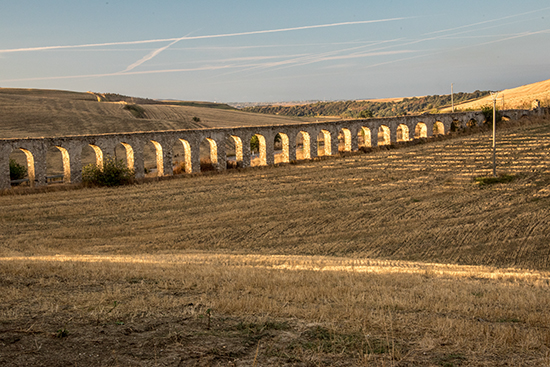
A pleasant drive, that has views over the rolling hills of Lazio, with the remains of an aquaduct appearing and dissappearing is to drive from Vetralla towards Tarquinia along the S2 bis road. That was my drive through heaven last year and we are returning again in 2018. The acquaduct appears as you past the town of Monte Romano heading towards Tarquinia.
Tarquinia
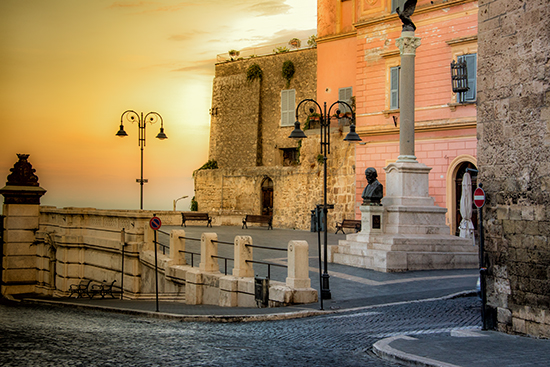
Every morning I would head our from Montalto di Castro to visit some of the towns in the area. My morning to see the sunrise in Tarquinia was spectacular. Located on a ridge, the view from the piazza over the valley is great. Lots of intereseting churches and buildings to view in the town. Tarquinia is less than 50 km from Viterbo, but you don't make that much time on the small roads. Just spend the time and enjoy the drive.
Tuscania
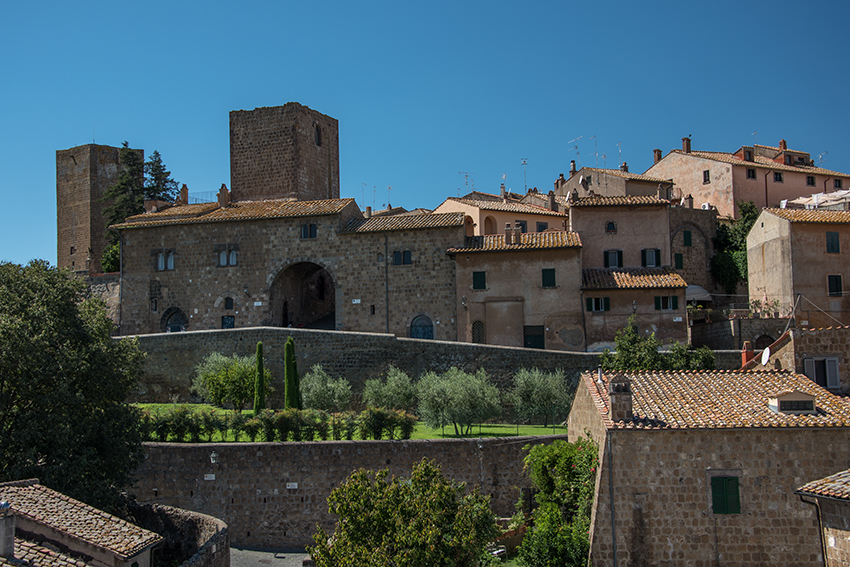
About a half-hour drive from Viterbo, Tuscania is one of the charming towns that luckily is not overrun with tourism.
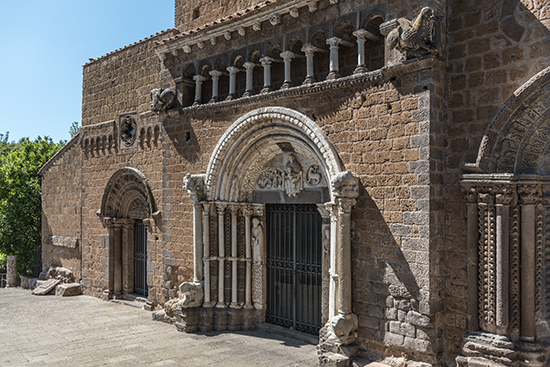
Pitigliano
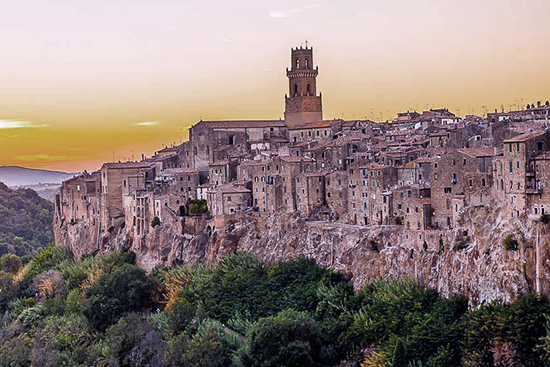
Known as little Jerusalem because of the historical Jerwish community, this is an interesting town located on tufa rock with a lush valley below. As a point of reference, it is an hour's drive from Viterbo.

