Trevi Fountain Rome

Rome

We return for the better part of a week in Rome. We love being in this city. For our week in Rome we have rented an apartment in the former Ginnasi Palace. Well situated, we are close to the Piazza Navona and Piazza Venezia.

Previous
Next

Palazzo Ginnasi

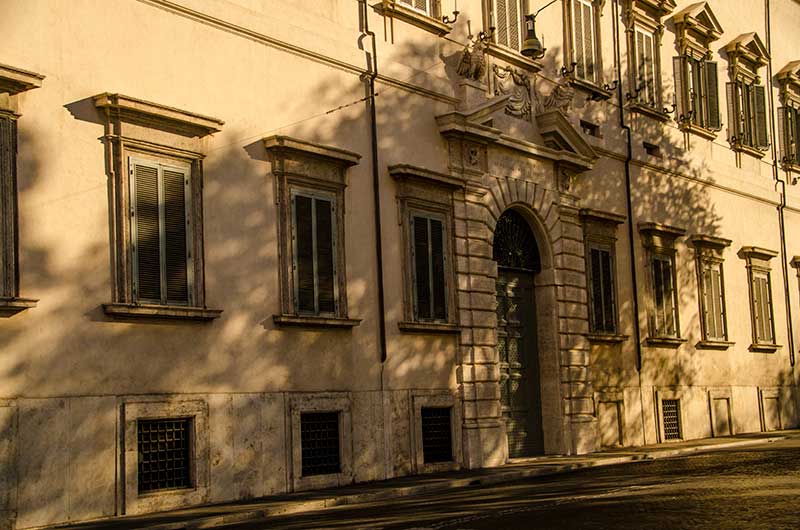
This Ginnasi is located on largo di Santa Lucia Filippini, just off via della Botteghe Oscure (street of the dark shops). The current building replaced the original 16th century palace, with the rebuilding taking place in 1935 as part of the work to widen Via delle Botteghe Oscure. The name of the building comes from its history. It was was commissioned by Cardinal Domenico Ginnasi in 1590.

The Ginnasi were a prominent Roman family at the beginning of the 17th century when Domenico Ginnasi was appointed Cardinal by Pope Clement VIII. Previously, the family's Baroque funeral monuments were in church of Santa Lucia, which was joined to the original palace. When the building was rebuilt, the marble funeral monuments were moved to a private chapel inside the new building. The coat of arms, which once stood on the façade of the old palace, remain above the door of the new Ginnasi.

The area appears to be interesting. Via della Botteghe Oscore (street of the dark shops), has a name from Medieval times when the street had artisan shops, inside the dark arches of the ancient Theatre of Balbus (13 BC.), and had no windows. The street runs from the Largo di Torre Argentina (the remains of the roman theatres, including Pompey's Theater - where Julius Caesar was killed, down to the Piazza Venezia

During World War II, this was the centre of the communist party, the Bottegone, was located at Number 5 on the via della Botteghe Oscore.

There are remains of a temple in the Campus Martius. The ruins of the temple, two columns with Corinthian capitals and part of the podium, were found in 1938 during the demolition for widening Via delle Botteghe Oscure.

Also near is the Palazzo Mattei, and the S. Stanislato dei Polacchi. The church of the Polish Nation is a central meeting place for the Polish Community of Rome.

Entrance to the apartment

Entrance at the Ginnasi Apartment.

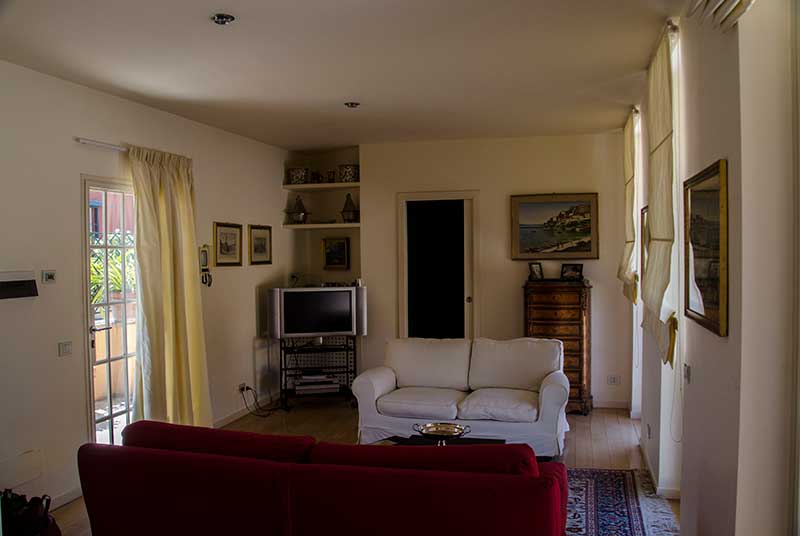
Living room area

Living room area of the apartment.

Kitchen

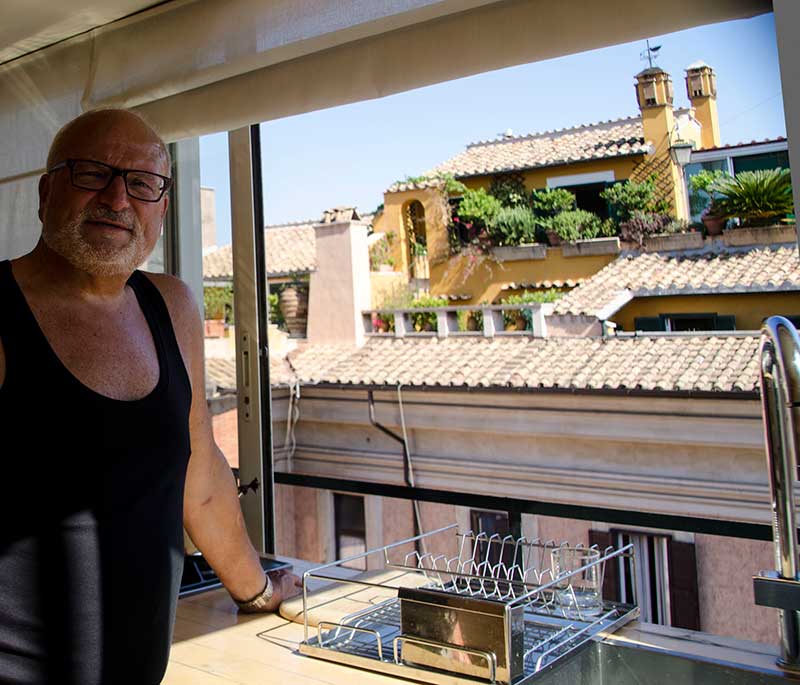
Glenn is looking forward to be in this kitchen.

Bedroom

Bedroom, with access to the patio.

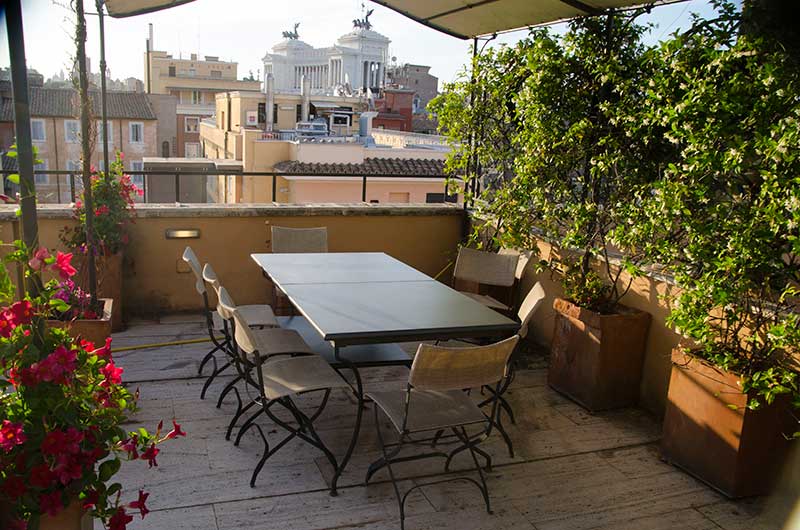
Patio

Patio

Patio


Largo di Torre Argentina

Largo di Torre Argentina

Part of ancient's Rome's Campus Martius, an large area that was outside the ancient walls of the old Roman City. Because it was outside the wall, ambassadors etc who were not given access to pass into Rome, could handle affairs here. Building took place and numerous important structures resulted. Pompey built the first stone theater in Rome in 55 BC and this theatre was sometimes used by the Senate for meetings. After one of those meetings, this was where Julius Caesar was murdered in 44 B

Ara PacisThe Campus Martius also held the Alter of Augustan Peace (Ara Pacis), dating back to 9 BC to celebrate peace and prosperity from the military supremacy of the Roman Empire, lead by Augustus at the time. We viewed the Ara Pacis in the museum built for it. It is located on lungtevere in Augusta, along the Tiber River (www.arapacis.it). This is located in the upper north-west corner of the former Campus Martius It is near where the Ponte Cavour crosses the river.

The Largo di Torre Argentina (name relates back to Papal Mater of Ceremonies, who was from Strasbourg, and Strasbourg was originally called Argentoratum.

In 1909 Rome started the work of demolishing the zone of Torre Argentina, and during that, in 1927, they came across the colossal head and arm of a marble statue and the remains of Roman temples.

Also of note, here is the Torre Argentina Cat Sanctuary, which is a sheltered zone for homeless cats.

Pantheon

Pantheon in RomeAlso in the previous Campus Martius is the Pantheon - one of the best preserved Roman buildings that remain. Now, some 2000 years after it was built, it still has the largest non-reinforced concrete dome in the world. It was built under the direction of Augustus Caesar and his supporters. There were more than 20 structures build across the Campus Martius.

The original building was destroyed by fire in 80 AD, rebuilt by ruler Domitian and then burned again in 110 AD. In Medieval time, Phocas, the emperor of Byzantine gave the building to Pope Boniface IV who established it as a Christian church. This probably saved the building from the period when the majority of Rome's ancient buildings were destroyed.

The "M" in the inscription "M. Agrippa..." across the portal stands for Marcus Agrippa. But he actually had another similar structure elsewhere in the Campus which was destroyed.

The Pantheon is about a 10 minute walk from our apartment.

Palazzo Venezia

Palazzo VeneziaThis now holds the National Museum and we plan to visit. Hard to think that after the many trips to Rome we have yet to visit. We have plenty of days to work around the day it is closed, Monday.

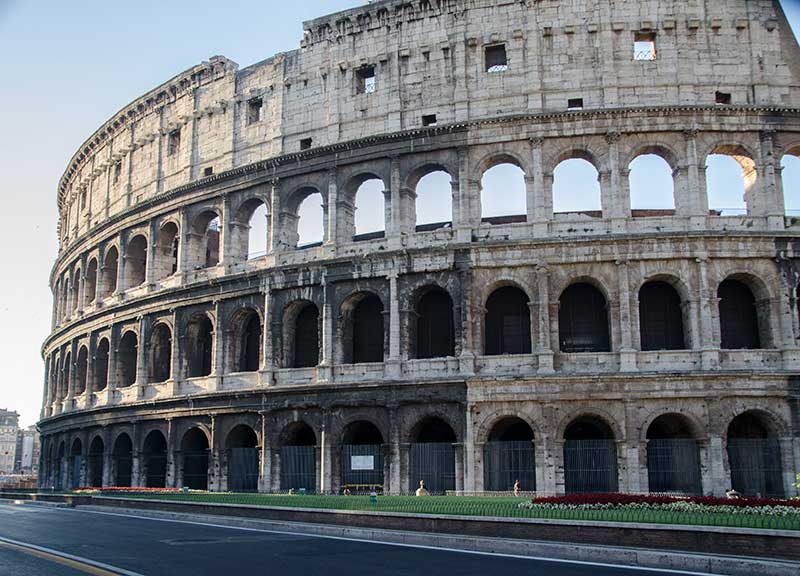
Much of the stone to build the Palazzo was taken from the Colosseum. Pope Paolo II built the Palace in 1455 while he was only a cardinal. It was at one time the Palace of St. Mark.

In 1469 it became a residence of the cardinals appoint to the Church of San Marco (the ancient church was founded by Pope Marcus in 336 and is actually incorporated within the structure), and in 1469 a residential papal palace. Then, for political alliance with Venice, Pope Pius IV gave the palazzo to the ambassadors of La Serenissima on the condition that the Apartment Cibo be retained as a residence for the cardinals, and the Venetian Republic would look after maintenance and future restoration.

The building was a seat for the Ambassador of Austria to the Vatican, but in 1916, when Italy was at war with Austria and Hungary, Italy seized the building. Benito Mussolini's office was established here and he used the balcony to deliver speeches - including the declaration of the Italian Empire on May 9, 1936.

But to give an idea of much changed in Rome over the many years, in 1911, to provide enough space for the monument to Victor Emanuel II, located across the Piazza Venezia, the entire "greenhouse" of Paul II, was moved and reconstructed with all its stones, marble and cloisters on the left side of the the Palazzo Venezia.

Monumento Nazionale a Vittorio Emanuele II

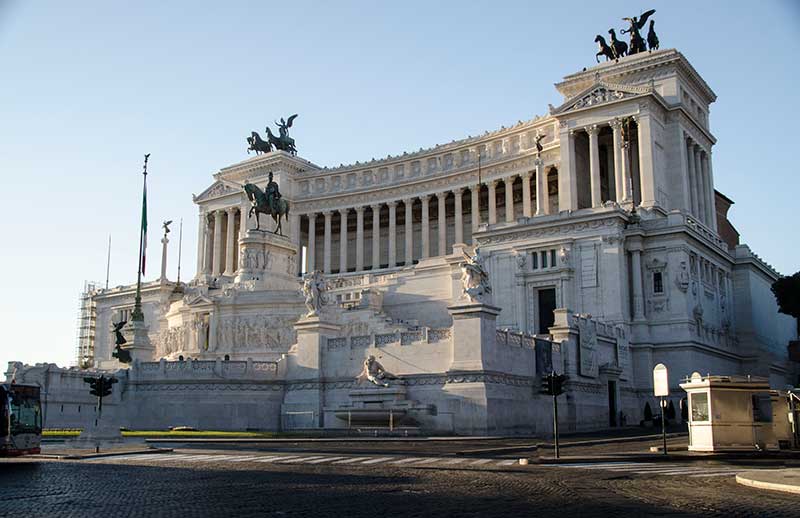
Vittorio Emanuele MonumentThis is the moment to Vittorio Emanuele II, the first King of a unified Italy. Work started in 1911 and was completed in 1935. Built of white marble, it gleams, and stands apart from the brown brick buildings of the area.

Being just down the street from our apartment, we will visit this again. The last time I was there it was raining, I was worried about slipping on the marble steps as I climbed to the main level. Hopefully we will have good hot sunny weather.

This is an important structure in Rome. As noted in information on various buildings in the area, Rome rebuilt a number of structure to widen streets that lead to the Monument, and moved entire structures, including a Papal garden which was relocated within the Palazzo Venetia, to accommodate the size of this Monument.

I do remember good views from the top level.

Civitavecchia

We will leave Rome and travel to Civitavecchia, about 80 km north-west of Rome.to position ourselves for the ferry trip to Sardinia.

Hotel Miramare - CivitavecchiaWe will stay at the Hotel Miramare as it is located on the beach along the Pirgo Promenade. The hotel is in a building that dates to the 1900s, so it will have some character.

This makes it easy to arrive by train, make the necessary car arrangements and take the ferry to Sardina.

We have never been to Civitavecchia. The town includes the large Forte Michelangelo, first completed in 1535. The upper part of the maschio tower was designed by Michelangelo.

The Cathedral of San Francesco d'Assisi dates from the 18th Century. Built by the the Franciscans it is said to be an impressive church. It is located between the centre and the Viale Garibaldi.

Reports we have seen are that the Pizzeria al Ghetto, which is only open at night, is worth a visit. They serve only two types of pizzia: margarita or anchovy. Going early is the best option to get one of the tables outside.